Drone Laws guide · Source-reviewed article
How to choose and use the FAA airspace-authorization path
Learn what LAANC does, how FAA-approved suppliers and UAS Facility Maps fit, when manual Part 107 paths apply, and what authorization does not cover.
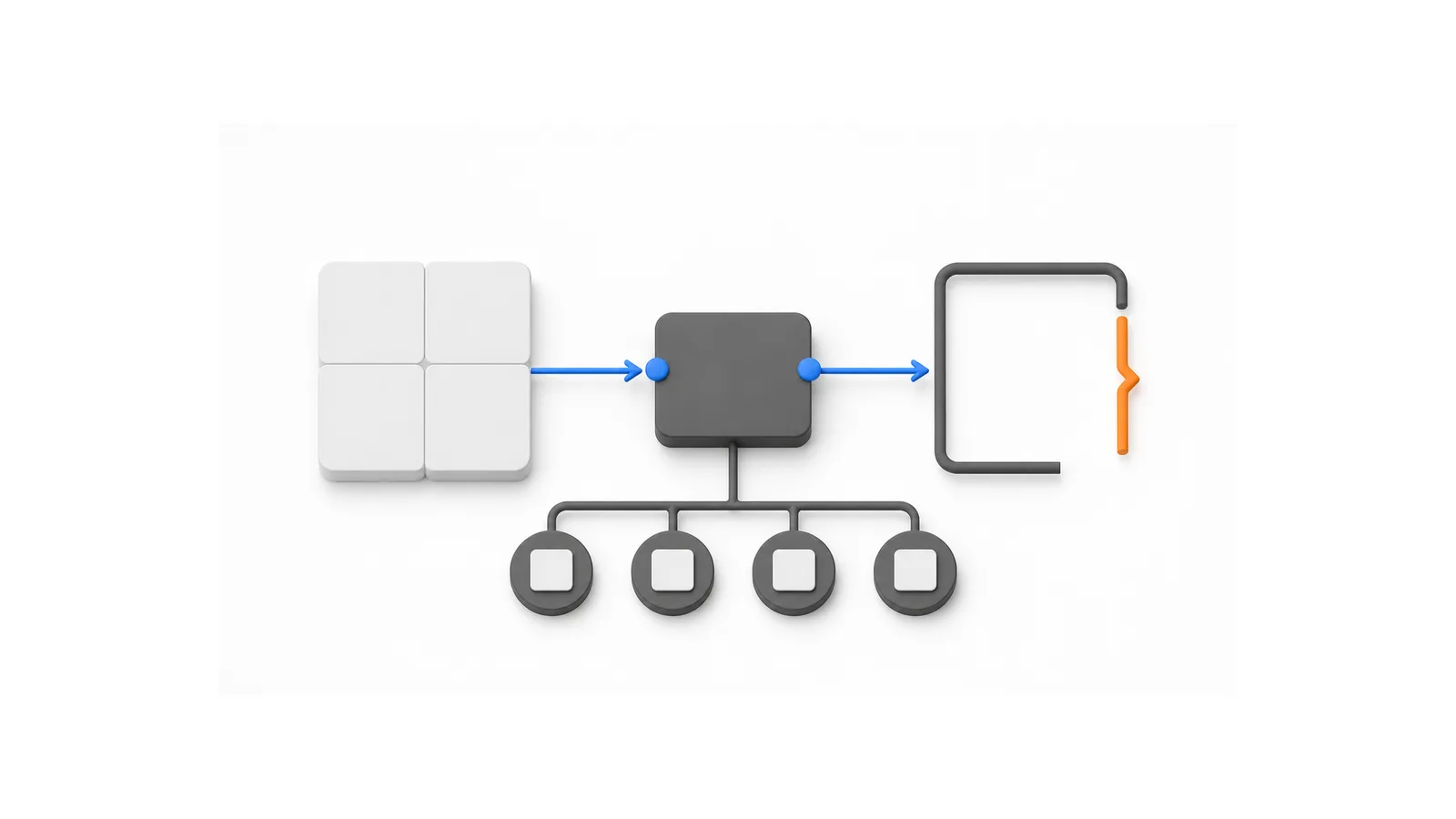
LAANC helps eligible drone pilots request FAA airspace authorization through approved digital suppliers where the FAA has made that capability available. It is a way to request authorization for a controlled-airspace operation. It is not a general where-to-fly app, not a guarantee of approval, not a provider recommendation and not complete flight clearance.
The safe workflow is source-first: decide whether the planned operation needs FAA controlled-airspace authorization, check current FAA LAANC and UAS Facility Map sources, choose an FAA-approved supplier only from the current list when LAANC is available, and use the correct manual FAA path when LAANC does not fit. Then read the actual authorization and continue the remaining preflight checks.
Concise answer: LAANC is the Low Altitude Authorization and Notification Capability. Use it only for eligible controlled-airspace authorization requests where FAA LAANC is available, follow the request path that fits the operation, and do not treat a grid value, provider screen or authorization as complete flight clearance.
Key takeaways
- LAANC is an FAA/industry data-exchange capability for airspace-authorization requests.
- Controlled-airspace authorization is about the airspace and operation, not simply being near an airport.
- A UAS Facility Map value is not authorization. It is planning and processing context.
- Near-real-time LAANC requests are for the flight date at or below the available grid value, with no approval guarantee.
- Part 107 further coordination may be requested up to 90 days ahead and must be submitted at least 72 hours before the requested start; do not extend that timing to recreational users.
- Manual Part 107 DroneZone requests should be submitted at least 60 days before the proposed operation; do not extend that timing to recreational users.
- Authorization is not complete flight clearance. TFRs, NOTAMs, weather, operating rules, landowner or local launch limits and mission conditions remain separate.
1. Start with controlled-airspace authorization
Begin with the planned operation, not a map app shortcut. FAA and statutory materials tie LAANC to controlled-airspace authorization for eligible drone operations. Part 107 includes an airspace-authorization rule for certain controlled airspace, and Section 44809 separately gives the recreational framework controlled-airspace context.
Do not use "near an airport" as the whole legal test. An airport may be a useful warning sign, but FAA guidance does not show that every operation near an airport automatically follows the same LAANC path. Check the current FAA airspace page, the operation's purpose, the location, the requested altitude, timing, and whether LAANC is available for that area.
Check registration and operating-path requirements before treating an airspace request as ready. LAANC does not prove registration compliance or whole-operation legality.
That separation also keeps this page from becoming a general drone-law primer. Use it for the airspace-authorization question, then use the right official source or linked Drone Home resource for registration, Remote ID, event restrictions and operating-path questions.
2. Understand what LAANC does
LAANC stands for Low Altitude Authorization and Notification Capability. FAA guidance describes it as an FAA/industry data-exchange capability used through FAA-approved UAS Service Suppliers for airspace-authorization requests.
That definition matters because it limits the claim. A supplier interface may help submit a request, but the supplier is not Drone Home's recommendation and the interface is not the legal authority. Provider pages may prove only their own current interface or platform availability. The current FAA LAANC page and supplier table control the public provider-list statement.
LAANC is not permission to fly. It is an airspace authorization pathway. A granted authorization still has exact details and conditions that the pilot must review, and it leaves other flight checks in place.
3. Treat UAS Facility Maps as planning data
FAA UAS Facility Maps are useful because they show grid values used in the authorization context. Those values help explain what may fit automated or near-real-time processing.
A grid value is not authorization. It is not a permission altitude, not a promise that the request will be approved, and not a complete safety review for the operation. The pilot still needs an actual authorization through the applicable FAA path and must read the specific authorization details before flying.
This page does not reproduce live map tiles, airport layouts, coordinates, user locations or provider app screens. Use current FAA pages and an original fictional diagram only. If map data or FAA wording changes, recheck any grid-value explanation before relying on it.
4. Separate the three timing paths
Current FAA guidance separates three timing classes. Keep them separate rather than blending them into one "fast approval" promise.
Near-real-time LAANC request
The near-real-time path is for a request on the flight date at or below the available grid value. It is still a request and still has conditions. Do not call it instant approval, automatic approval or guaranteed processing.
Part 107 further coordination
Part 107 further coordination may be requested up to 90 days ahead and must be submitted at least 72 hours before the requested start. It is manually coordinated and not guaranteed. This is a Part 107 timing path in the accepted evidence, so do not apply the 90-day or 72-hour rule to recreational users unless a current source later proves that treatment.
Manual Part 107 DroneZone request
When the operation belongs in the manual Part 107 path, current accepted FAA guidance says the manual DroneZone request should be submitted at least 60 days before the proposed operation. The accepted evidence also warns that late manual Part 107 requests may be denied or cancelled. Do not extend that 60-day Part 107 manual timing to recreational users without a current source.
These paths are guidance, not approval guarantees. If a request does not fit automated criteria, is not in a LAANC-enabled area, needs review beyond the available grid value or involves a Part 107 manual path, direct the reader to the current official FAA process rather than inventing a workaround.
LAANC request-path comparison
- Start with whether the planned operation needs FAA controlled-airspace authorization.
- Use the current FAA LAANC supplier list only when LAANC is available for the operation.
- Near-real-time request: flight date, at or below the available grid value, with no approval guarantee.
- Part 107 further coordination: up to 90 days ahead and at least 72 hours before requested start; do not extend this timing to recreational users.
- Manual Part 107 DroneZone request: at least 60 days before the proposed operation; do not extend this timing to recreational users.
- UAS Facility Map values are planning data, not authorization.
- Authorization is not complete flight clearance; TFRs, NOTAMs, weather, operating rules, launch limits and mission conditions remain separate.
Decision flow separating LAANC availability, three request paths, UAS Facility Map planning data and remaining flight checks.

5. Choose an FAA-approved supplier neutrally
Use the current FAA LAANC page and approved supplier list. Do not rely on a copied provider list or a live airport count in static copy, because airport coverage and provider participation can change.
Provider selection should stay neutral. Drone Home has no affiliate relationship in this article, does not rank apps, does not evaluate provider privacy or reliability, does not submit requests, does not store locations and does not troubleshoot accounts. A link to the FAA list is informational, not a Drone Home endorsement.
If the current FAA supplier list changes, rely on the official list and avoid copied provider claims. If the FAA list becomes unavailable or materially changes, stop using provider-selection instructions until current FAA support is confirmed.
6. Use manual and waiver paths when LAANC does not fit
LAANC availability is not universal. If LAANC is unavailable for the area, the request does not fit automated criteria or the operation requires a manual review path, use the applicable current FAA manual or DroneZone route instead of trying to force the request through a provider.
Some operations may require both a waiver and an airspace authorization. Keep those as separate FAA actions. Do not imply that a waiver automatically includes airspace authorization, and do not imply that an airspace authorization automatically waives a separate operating rule.
This page does not provide form-filling instructions beyond source-bounded routing. Do not collect mission details, submit an authorization request, simulate approval, prefill a provider, contact a tower, create a DroneZone account or claim that an operation is eligible.
7. Know the tower-notification boundary
Use only the accepted FAA wording. Unless the authorization specifically requests it, FAA says the pilot does not need to notify the tower. Do not broaden that into advice to call, text or otherwise contact a tower.
The practical instruction is to read the actual authorization. If it contains a tower-notification condition, follow the authorization. If it does not, do not invent tower-contact steps from general caution or community advice.
That boundary protects both sides of the article. It avoids telling pilots to ignore a condition that appears in a specific authorization, and it also avoids creating an unsupported extra procedure when FAA guidance says it is not needed unless requested.
8. Authorization is not complete flight clearance
Even after airspace authorization, the pilot still has work to do. Keep the remaining checks visible and separate:
- TFRs, NOTAMs and event restrictions can still affect the flight.
- Weather and visibility can still make a flight unsafe or outside the operation's limits.
- Operating rules, including the pilot's chosen recreational or Part 107 path, still apply.
- Registration and Remote ID requirements remain separate from LAANC.
- Landowner, venue, local, state, tribal or territorial launch and landing limits may affect access.
- Mission-specific conditions in the authorization must be read before flight.
Do not present LAANC as complete flight legality. A provider screen or FAA authorization is not a universal clearance certificate. It is one airspace authorization for the specific operation and conditions stated.
For related context, use Drone Home's drone-law hub, beginner drone-law guide and stadium/event restrictions guide. Do not treat related links as proof that every linked rule path applies to the same flight.
Related reading
- Drone laws - parent hub for U.S. drone-law and airspace tasks.
- U.S. drone laws for beginners - broader federal-rule framework.
- How to check drone restrictions around stadiums and major events - contextual event and stadium restriction checks.
Sources
- FAA - UAS Data Exchange (LAANC), updated 2024-12-05, checked 2026-08-10.
- FAA - UAS Facility Maps, updated 2023-04-12, checked 2026-08-10.
- FAA - Part 107 Airspace Authorizations, updated 2025-03-26, checked 2026-08-10.
- eCFR - 14 CFR Part 107 issue snapshot dated August 5, 2026, checked 2026-08-10.
- U.S. House OLRC - 49 U.S.C. Section 44809, checked 2026-08-10.
- FAA - Recreational Flyers and Community-Based Organizations, updated 2026-03-18, checked 2026-08-10.
Disclaimer
This guide provides general U.S. information and is not a flight-specific determination or legal advice. Use the current official FAA page, map, supplier list, DroneZone path and authorization text for the actual request. Drone Home does not access, complete, submit, monitor or guarantee any authorization request and is not affiliated with or endorsed by the FAA or any LAANC provider.
Sources
These sources were reviewed for this guide. Recheck current official and first-party pages before operational use.
Keep reading
Keep learning
Explore more practical guides for drone rules, equipment, software, and commercial workflows.
More Drone Laws guidesStay current
Drone Home Weekly is not accepting signups yet.
Drone Home is preparing a source-reviewed update list, but there is no approved newsletter endpoint or mailing-list processor active on this site.
No email address is accepted, transmitted, stored, logged, added to a list, or shared from this page.
Read the latest drone news