FAA research awards / Current
FAA's October 5 Drone Research Awards: $12 Million for 19 Listed Projects
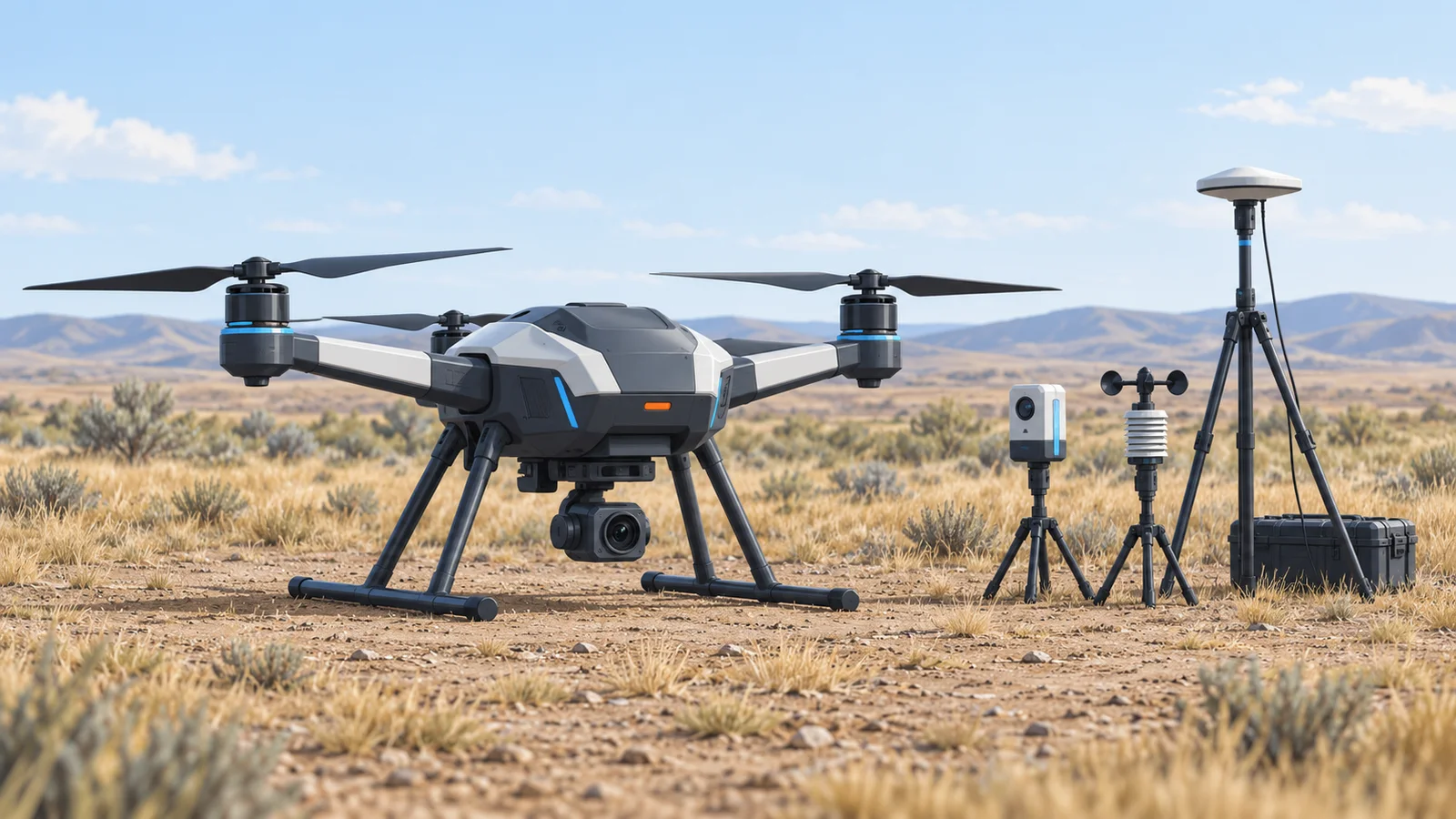
Original Drone Home editorial illustration of drone research. It does not show an actual FAA-funded project, test result or approved operation.
AI-generated editorial illustration; not a photograph of an FAA project.
Quick answer
On October 5, 2026, the FAA announced $12 million in drone research and testing awards through its Unmanned Aircraft Systems Broad Agency Announcement program. Its release lists 19 projects, covering subjects from aircraft detection to communications and traffic coordination. The award announcement itself is not an operating rule, waiver, airspace authorization or aircraft approval.
This is a dated follow-up to that October 5 announcement. The official sources were checked on October 16, 2026; the later check does not make the awards a new October 16 event. The FAA announcement is the source for the amount and project list below.
What the FAA announced
The FAA says the awards support research with FAA-designated UAS test sites. Its BAA program page describes funding opportunities for qualified commercial entities partnered with those sites. That explains the program structure; it does not establish a particular project's test location, completion date or results.
The release describes 19 companies, but its numbered list repeats ANRA Technologies and SPS Aerial Remote Sensing. We use 19 listed projects to describe the entries without claiming 19 distinct recipients. The $12 million is the FAA's announced package amount, not a project-by-project total calculated here or a statement that funds have already been paid out.
The 19-project research map
The table follows the FAA's list order. Research subjects are paraphrases of the agency's short descriptions, not findings that the technologies work. The five group labels are Drone Home editorial categories, not FAA classifications or rankings. A project can touch more than one subject; the assigned group is a reading aid, not an exhaustive technical description.

| FAA entry | Organization named | Research subject, paraphrased | Editorial group |
|---|---|---|---|
| 1 | General Atomics | Ground-based aircraft-avoidance systems for drones | Detection and visibility |
| 2 | NAVMAR | Systems intended to support large-drone safety | Broad systems and demonstrations |
| 3 | SPS Aerial Remote Sensing | Testing technology for drone visibility | Detection and visibility |
| 4 | ANRA Technologies | Connecting air-taxi operations with vertiports and flight procedures | Coordination and airspace |
| 5 | Devorto Corporation | Cargo service using long-range drones | Range and communications |
| 6 | ANRA Technologies | A shared altitude reference for drones | Coordination and airspace |
| 7 | DroneUp LLC | Verification of drone identity and permission to fly | Identity and sensing |
| 8 | SPS Aerial Remote Sensing | Sensors for drone traffic management and counter-drone work | Identity and sensing |
| 9 | SPS Aerial Remote Sensing | Measuring how sensors perform | Identity and sensing |
| 10 | OneRadio Corporation | Passive-radar tests for aircraft avoidance | Detection and visibility |
| 11 | Censys Technologies Corp | Satellite-communication tests for long-range drone flights | Range and communications |
| 12 | Frequentis USA | Demonstrating drone technology | Broad systems and demonstrations |
| 13 | ANRA Technologies | Connecting drone traffic systems and conventional airport air traffic systems | Coordination and airspace |
| 14 | ANRA Technologies | AI-based identification of drone types | Identity and sensing |
| 15 | Skydweller | Onboard aircraft-avoidance systems for large drones | Detection and visibility |
| 16 | Aerial Vantage | Managing reserved urban airspace for drones | Coordination and airspace |
| 17 | Lighthouse Avionics Inc. | Surveillance for long-range drone routes | Range and communications |
| 18 | ResilienX, Inc. | Coordinating drone missions and resources through software | Coordination and airspace |
| 19 | Oklahoma State University | Aero Aware drone-visibility technology | Detection and visibility |
Source: FAA's October 5, 2026 announcement, checked October 16, 2026. Editorial grouping by Drone Home. Entries describe research subjects, not demonstrated results or operating permissions.
For example, the DroneUp entry concerns verification of identity and permission; inclusion in the list does not grant that permission. The NAVMAR safety description expresses a research aim, not a demonstrated safety result. Frequentis's entry gives only a broad demonstration description, so the table does not assign it a specific technology, performance target or outcome.
Research evidence and permission are different questions
The FAA's research overview says research supports work on regulations, policies, procedures, guidance and standards. That is general context for why evidence matters. It does not establish that any one of these awards will produce a particular rule or authorization.

| Point in the process | What readers can take from it | Limit to keep in view |
|---|---|---|
| Announced award | The FAA has identified funding and listed a research subject. | An award is not a result, certification or endorsement. |
| Research and testing | Testing can examine the stated technical question. | The announcement does not establish completed tests or measured performance. |
| Evidence from research | Findings may inform later FAA policy or standards work. | Neither a particular policy outcome nor a timetable follows from the award. |
| A real flight | Check the applicable rules and any required operation-specific permissions separately. | The award announcement cannot supply a waiver, airspace authorization or flight clearance. |
Research funding can support evidence gathering. It does not create an automatic path from an award to a new rule, an approved aircraft or permission for your flight. Source basis: FAA award announcement and research overview; operating context: FAA Part 107 and recreational-flyer guidance.
Why FAA pages show both seven and nine test sites
The sources do not agree on the count. On October 16, the October 5 announcement and FAA's test-site locations page both listed nine sites. The BAA program page, marked last updated March 30, 2026, still referred to seven.
For the network count, this report follows the announcement and the dedicated locations page while preserving the conflicting program-page wording. This is not a claim that the number changed on October 5. It also does not identify which site is attached to each award or suggest that each site received the same share of this package.
What to do with this information
If you are following a research subject, start with its numbered FAA entry. Look for a later official project report before relying on claims about performance or practical use. A funding announcement is a starting point for following evidence, not a reason to choose equipment or change an operating plan.
If you are planning a flight, consult the FAA Part 107 overview or FAA recreational-flyer guidance, as applicable. Those pages are agency guidance; use the governing requirements and any permissions applicable to the actual operation. This article does not choose a legal pathway for you.
Use the Drone Preflight Authority Map and Checklist to organize separate source checks, or read U.S. drone laws for beginners for broader background. Neither resource clears a flight.
For a separate program story, see the FAA BEYOND Phase 2 expansion announcement. That story concerns program participation, not this award list. Return to drone news for other dated updates.
Sources and updates
Sources checked October 16, 2026:
- FAA award announcement — October 5, 2026 event, amount and 19 project entries.
- FAA BAA program — partnership context; its seven-site wording conflicts with the announcement and locations page.
- FAA UAS test-site locations — nine-site list at the source check; not a project-to-site allocation.
- FAA drone research overview — general research purpose, not promised outcomes for these awards.
- FAA Part 107 overview — operating-guidance context, not permission supplied by the awards.
- FAA recreational-flyer guidance — recreational operating context, not permission supplied by the awards.
An FAA correction to the amount, project list or test-site information, a relevant official project report, or a separately documented operating-rule change would warrant revisiting this account. Any correction should identify the affected statement and carry its actual correction date; the October 5 event date should remain distinct.
Related internal route
Continue with the related Drone Home guide
Open related guideUpdate trigger: Recheck when FAA corrects the amount or project list, changes test-site information, publishes a relevant project report, or separately documents a change to applicable operating requirements.
Stay current
Drone Home Weekly is not accepting signups yet.
Drone Home is preparing a source-reviewed update list, but there is no approved newsletter endpoint or mailing-list processor active on this site.
No email address is accepted, transmitted, stored, logged, added to a list, or shared from this page.
Read the latest drone news